First interaction with AI Agents
You know those viral videos of "kids building AI agents in 10 minutes"?
You know those viral videos of "kids building AI agents in 10 minutes"?
They make it seem like the next generation (Alpha) is already automating us out of jobs.
Exaggeration? Maybe, but from my perspective everybody should be putting an eye on this stuffs at least to know what is about.
AI agents have been buzzing in headlines, promising autonomous capabilities that can make your coffee or, in dramatic forecasts, take over your tech job.
But here’s the thing: They’re here, but not yet...
When I first heard "AI agent," I couldn't help but think of Agent Smith
 Mr. Anderson, welcome back. We’ve missed you.
Thankfully, our current agents aren’t out to assimilate us into a dystopian network — they’re here to *assist *you with stuffs that you can delegate to them.
But the buzzwords can be intimidating if you’re just starting out.
**Why AI Agents? **
Truth be told, you don’t need to be a genius or a seasoned programmer to get started.
Thanks to accessible tools and resources, learning AI is no longer a privilege—it’s a choice.
Case in point: I stumbled upon this excellent GitHub repository packed with LLM-based projects and free resources.
It was the spark I needed to dive in and interact in first hand with the AI Agents.
**How I built my own agent **
Armed with my MacBook, some Python basics, and GitHub Copilot, I ventured into cloning/creating a simple app powered by multiple AI agents (using Google Gemini 1.5 Flash): 1. 2. 3. 4.
Within a couple of minutes, I had an app running that responded dynamically to user inputs, crafting holistic meal and fitness plans with ease.
My takeaway: AI agents can make an hybrid athlete training plan (my ambitious dream!) more accessible than ever.
Here’s what I learned:
- Libraries like Phidata, Streamlit, and Google’s generativeai SDK make the process really smooth.
- GitHub Copilot is a game-changer for debugging and enhancing code.
- The outputs? Practical, precise, and honestly better than some human trainers I’ve worked with in the past.
**Lessons learned **
It's easy than ever to start programming, not just for this stuffs, for everything that you can imagine.
Programming AI Agents is not rocket science at all.
I even asked Copilot to fact-check if this implementation is really using AI Agents —because hey, paranoia isn’t a bad thing in programming!
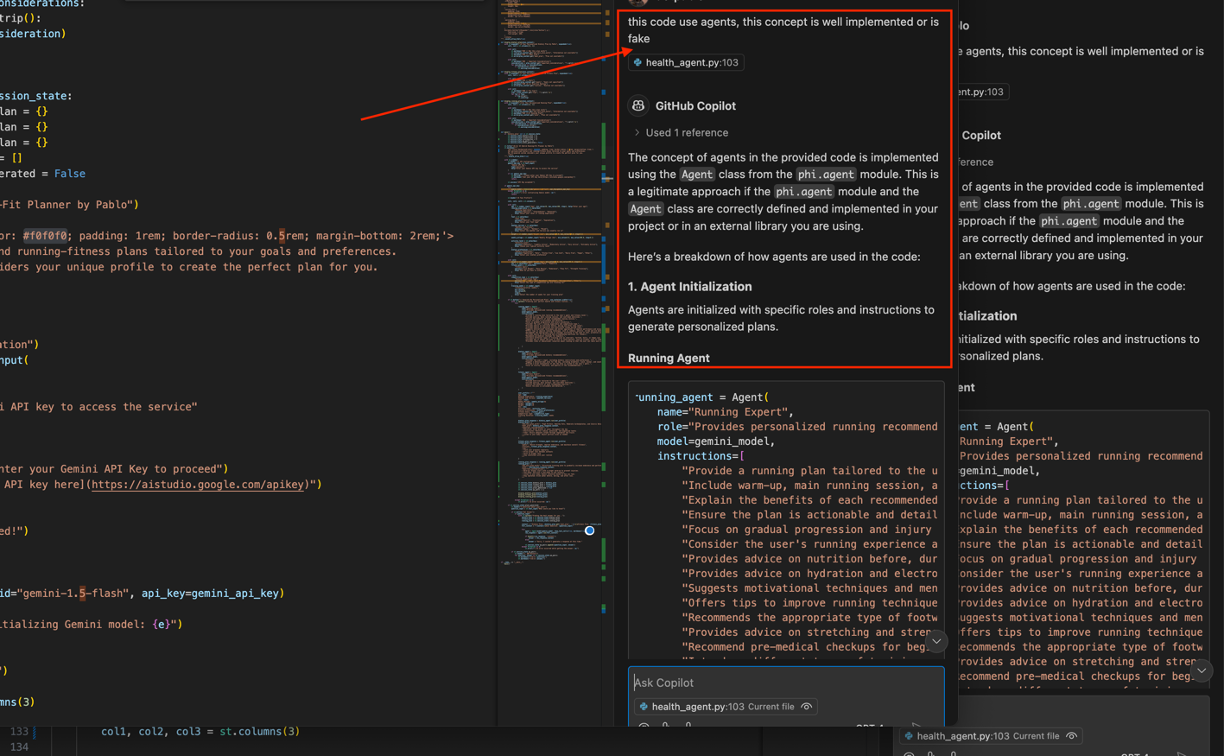 Myself asking silly questions to GitHub Copilot
Frankly I learned a lot of stuffs in just a couple of hours playing whit this code that years before (without AI and these powerful frameworks used here) would take years to have something at least similar.
Why you should care about this stuff
AI agents aren’t just tech for geeks—they’re tools for everyone.
Whether you’re into fitness, business automation, or hobby projects, there’s an agent (or many) waiting to make your life easier.
And trust me, the learning curve isn’t as steep as you think.
The result
Ready to take the leap?
Grab the repo, fire up your editor, and see what you can create.
Think of AI agents as your teammates, not your replacements (at least for the moment).
After all, even the best bots still need a human touch.
I’ve added a couple of more settings for the user to create a better running plan from this agent:
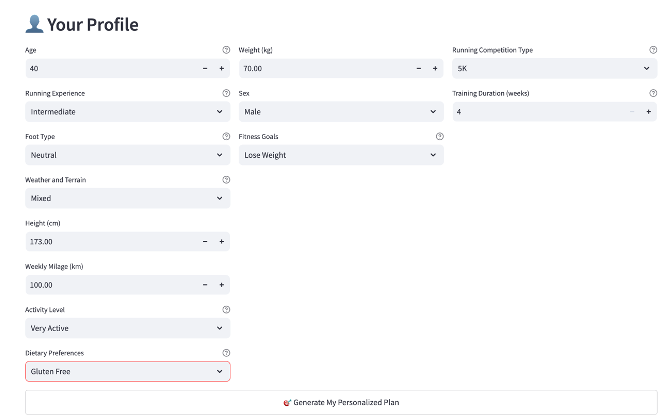 More parameters means better context for the agent's responses
This is the screen previous to deliver the result of the different agents:
 Take a couple of seconds to create the different responses, do
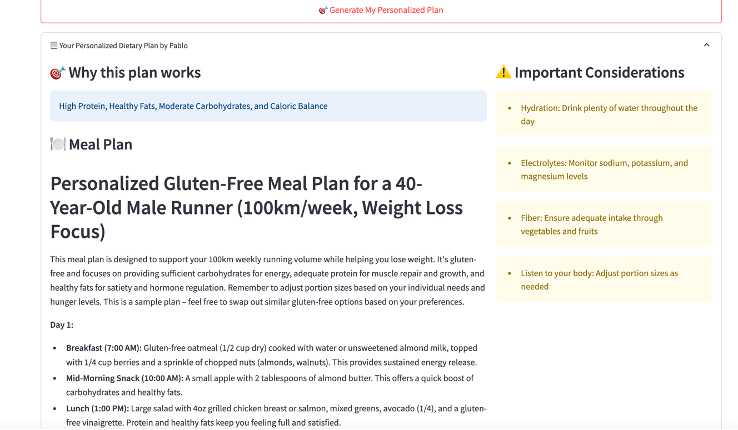
I not a gluten free guy but this just an partial example of the response of the first dietary agent:
This was the fitness agent response:
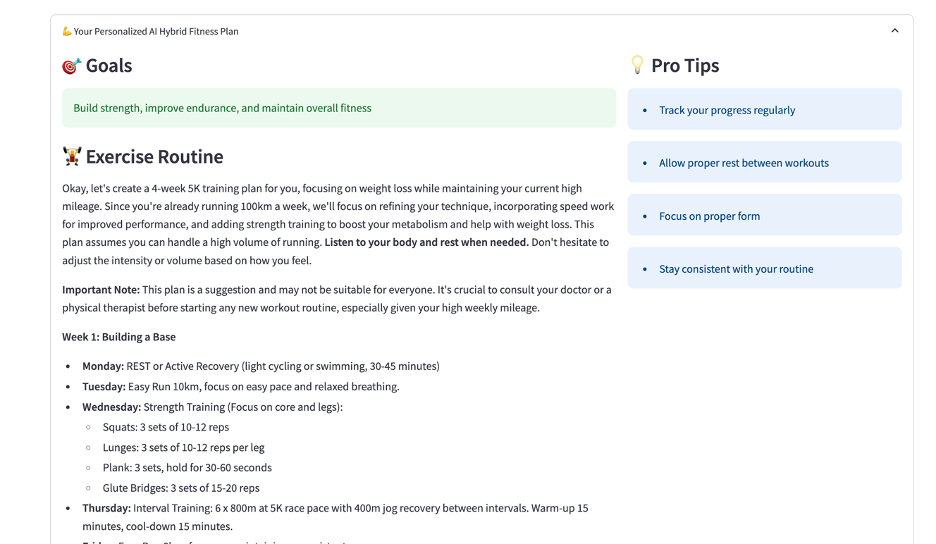
Pretty decent if you ask me.
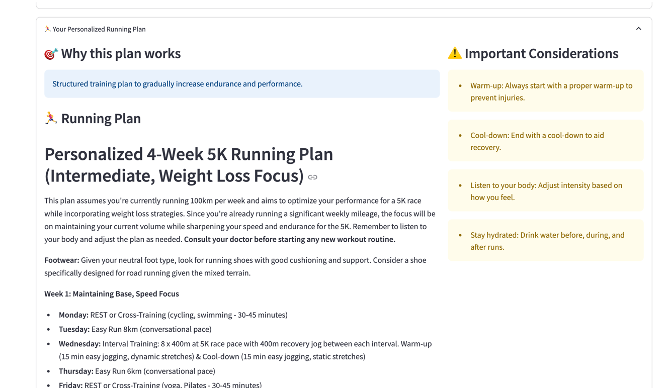
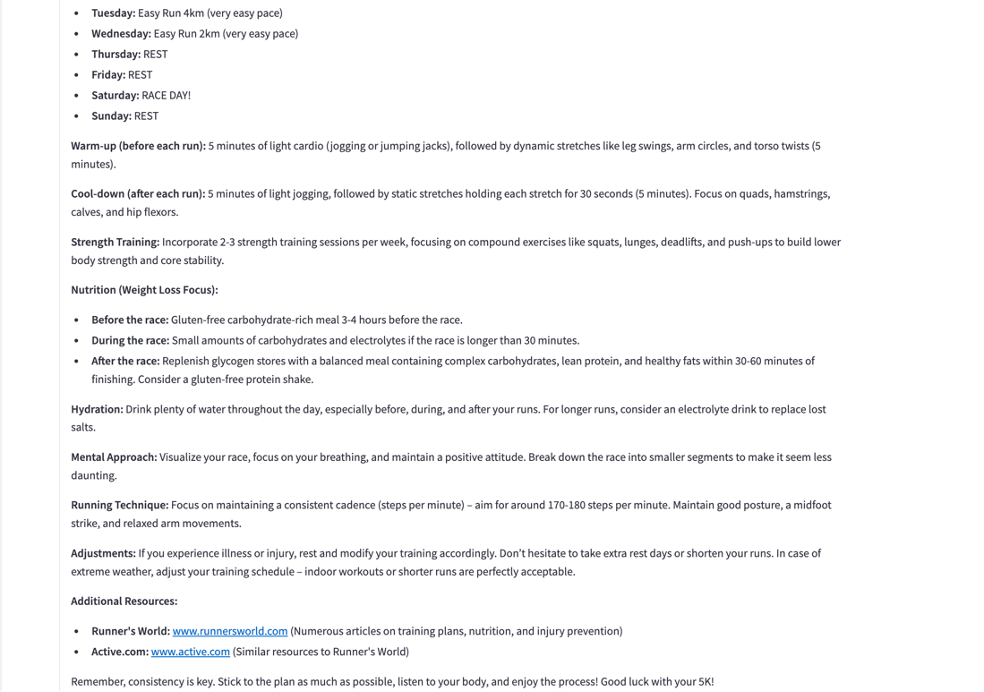
And the running agent response was pretty good as well:
Final Thoughts
There are thousands of ways to explore AI agents—this was just one of them. My next idea? Building agents for technical challenges in SAP.
Thanks for reading! If you made it this far, consider this your first step toward creating your own AI agent.
(And remember: “The key to the Matrix is choice.” So, choose to explore!)
Newsletter
Para el profesional tech que no quiere quedar obsoleto.
Cada semana: una dosis de criterio sobre SAP, IA de frontera y rendimiento humano. Sin motivación barata.